A spatial pen, language and AI, designed together.
3D ideas are still gated by the interface.
Beginners can't get in.
2D designers face a big gap into 3D.
Experts still spend their time operating tools.
AI is making geometry cheap. Spatial intent is still expensive.
The bottleneck moves from construction to communication.
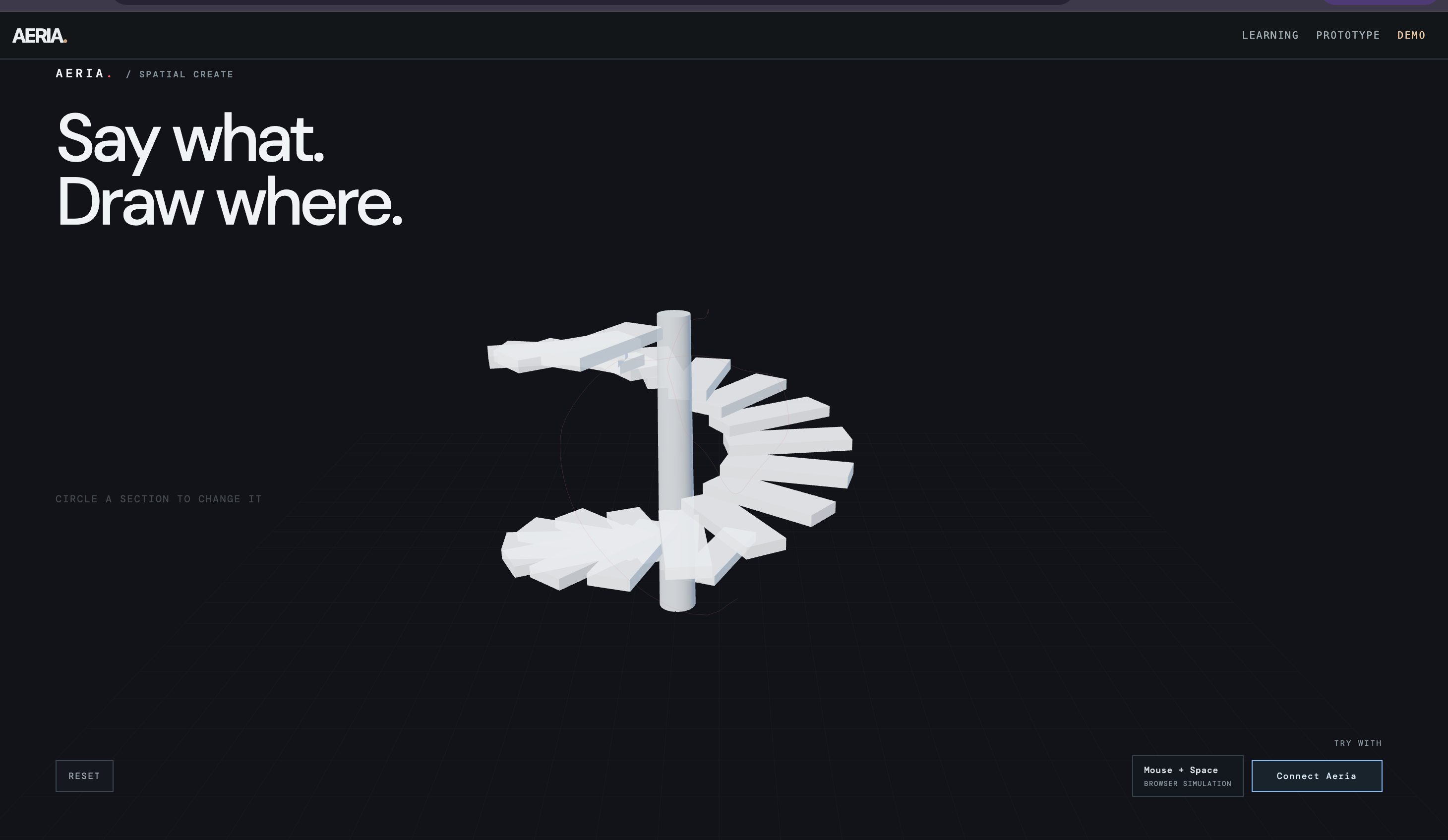
Say what. Draw where.
SPEAK=semantic intentWhat: "make a staircase."
DRAW=spatial intentWhere, which direction, what curve, which section, how wide, continue where.
AI=executionConstructs the geometry.
One interface. Every level of expertise.
Experts, fasterAnyone, sooner
3D professionalsFaster sketching, ideation and AI direction.2D designersA bridge into 3D without a full modeling workflow.LearnersCreate earlier. Learn spatial skill through guided practice.Everyday usersWork with spatial information without being a "modeler."Vision
The future of 3D creation isn't teaching everyone to model. It's letting more people express spatial intent.
Rough gesture in. Useful geometry out.
DrawSpeakGenerateManipulateIterate
PrototypingFlagship demo, in development. Concept visualization.
Draw, speak, change. No menus.
DrawSpeakGenerateManipulateIterate
Near-termAI as UI. Illustrative sequence, not yet built.
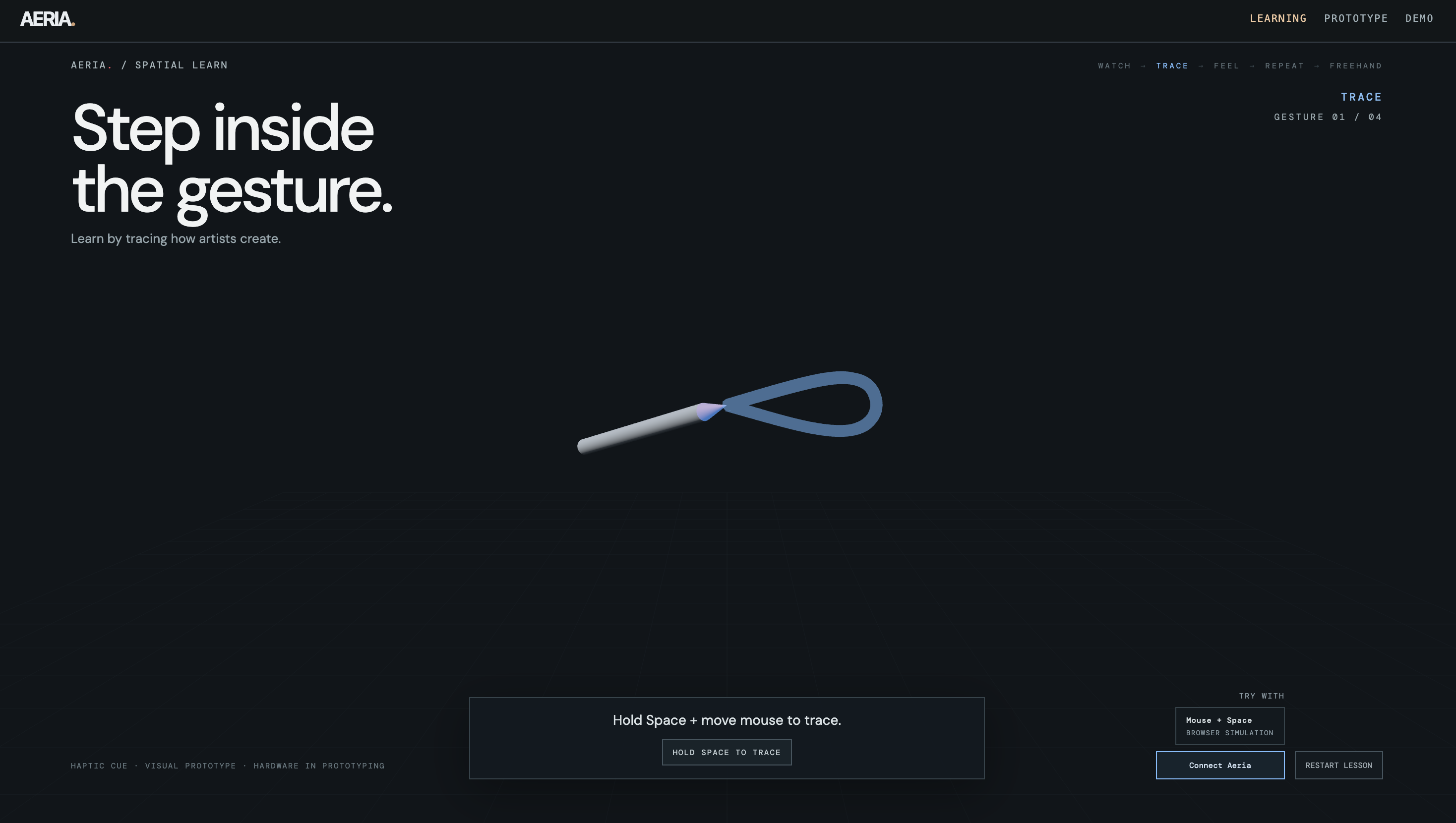
Don't just watch the tutorial. Step inside the gesture.
WatchTraceCorrectRepeatFreehand
Near-termIllustrative. A browser Learning flow exists; the VR version is not built.
Creators make. Their gestures become lessons.
No marketplace or community exists yet.
Spatial computing has a cold-start problem.
The bet isn't a headset boom. It's lighter hardware, cheaper content and easier creator tools arriving together.
Same interaction. Screens today, headsets next, glasses later.
TodayLaptop, desktop, tablet, phoneCreate and manipulate 3D content on existing screens.Prototyping
Now / nearVR and MR headsetsA direct spatial creation and learning interface.Near-term
FutureLightweight AR glassesDraw, annotate, select and talk to AI in the physical world.Vision
Annotate the physical world.
HighlightCircleNoteAskReturn
VisionEnvisioned interaction. Not built.
Existing products validate the form factor. The interaction model is the opening.
They are building better pens for existing spatial software. Aeria is rethinking the software around what becomes possible when AI and a spatial pen are designed together.
VisionAeria software can become the ecosystem. Aeria Pen can become its best native interface.
What exists today.
BuiltPrototypingNear-term
Prototyping
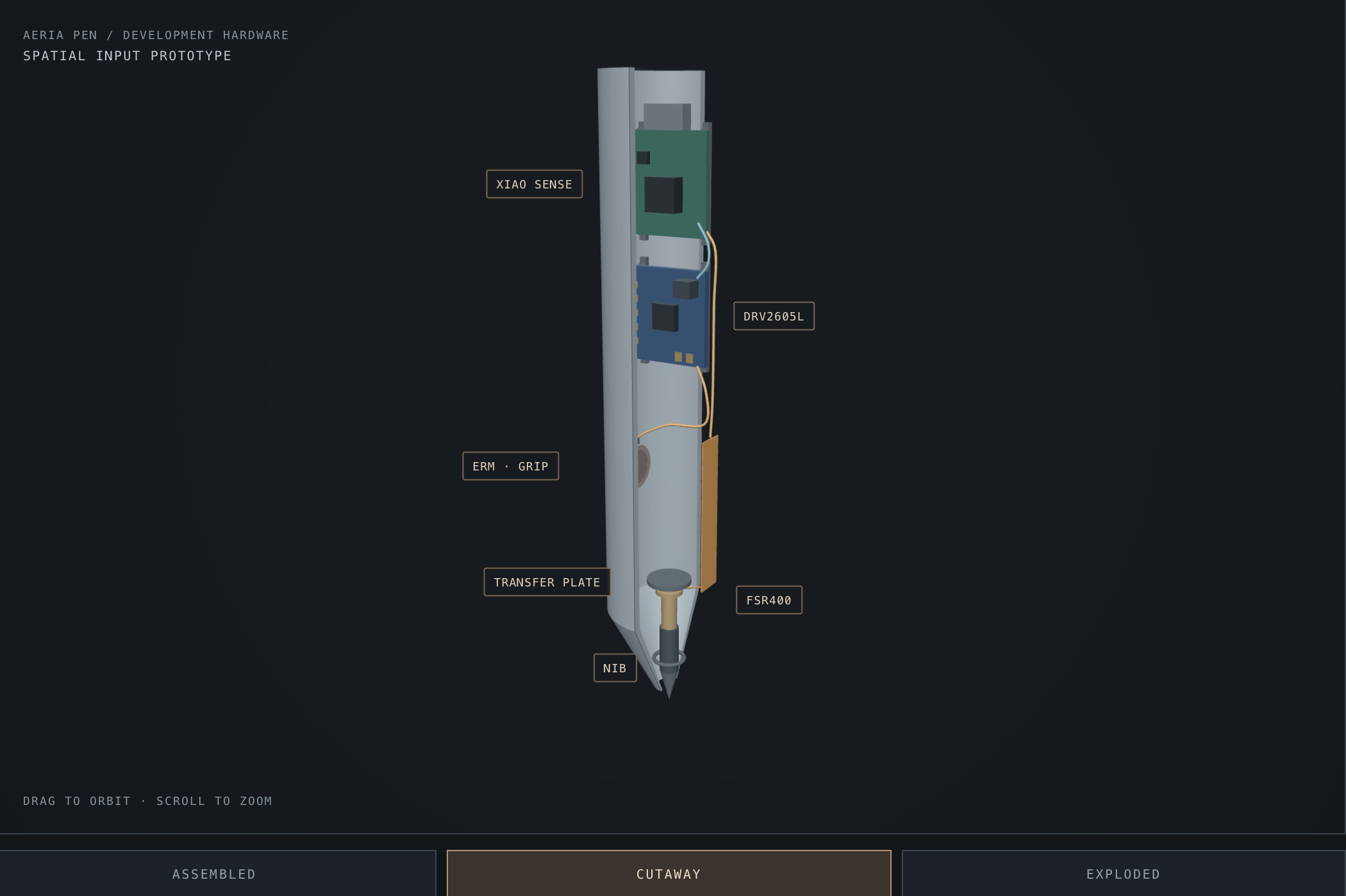
Spatial input componentsElectronics and component layout model.
CAD / Iteration
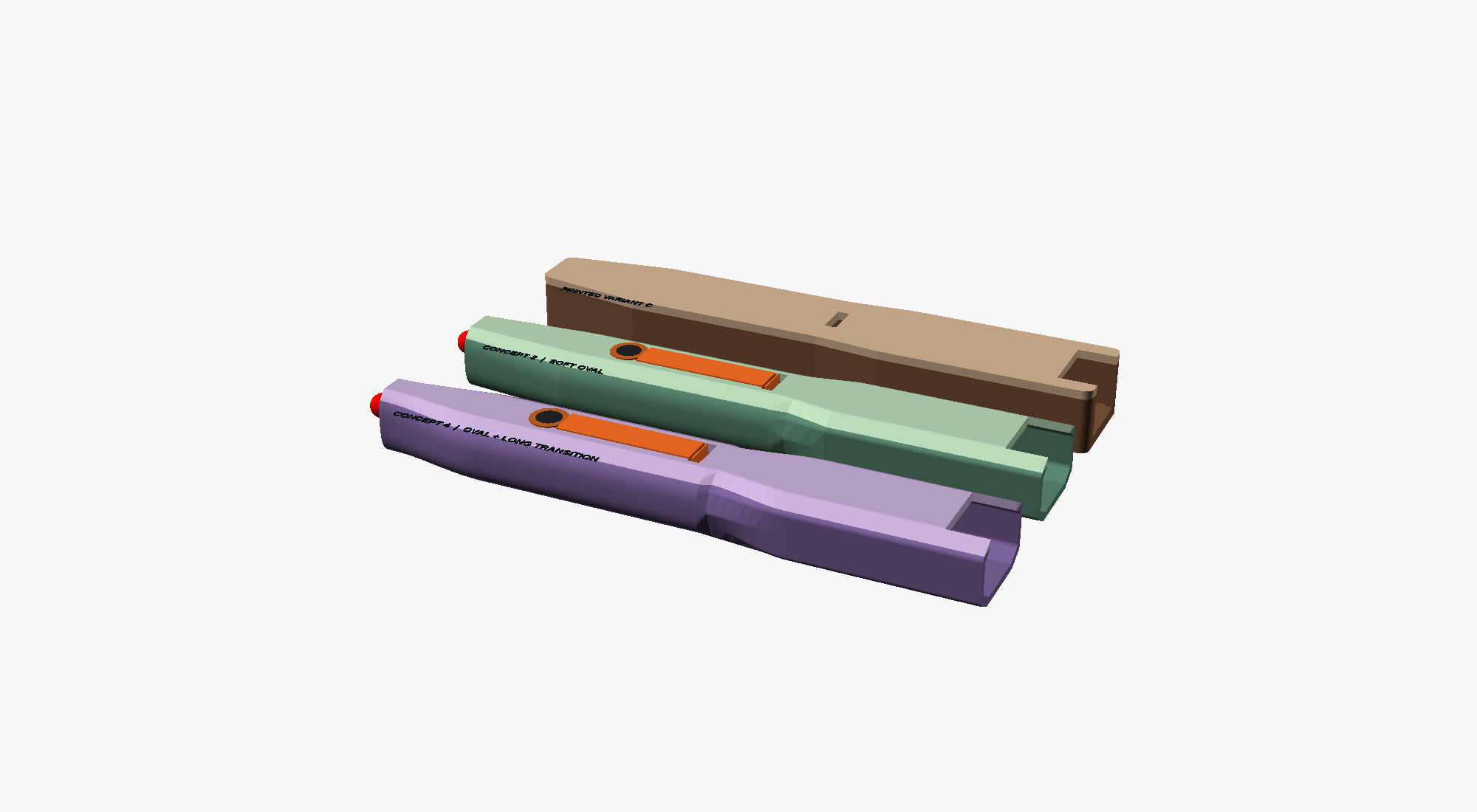
Enclosure progressionCAD studies across iterations.
Next iteration
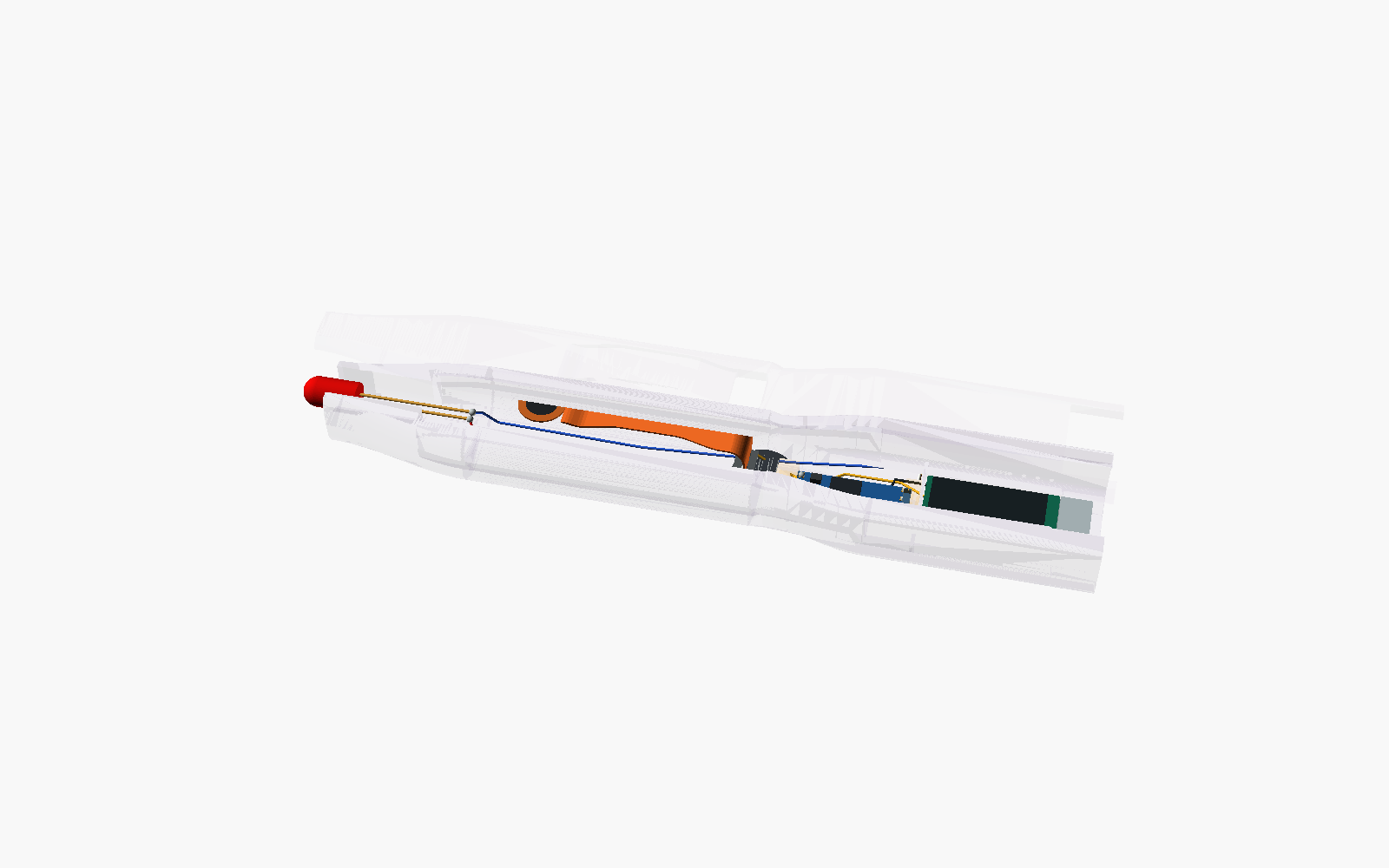
Concept 4 enclosureNext CAD iteration. Not printed or validated.
In development
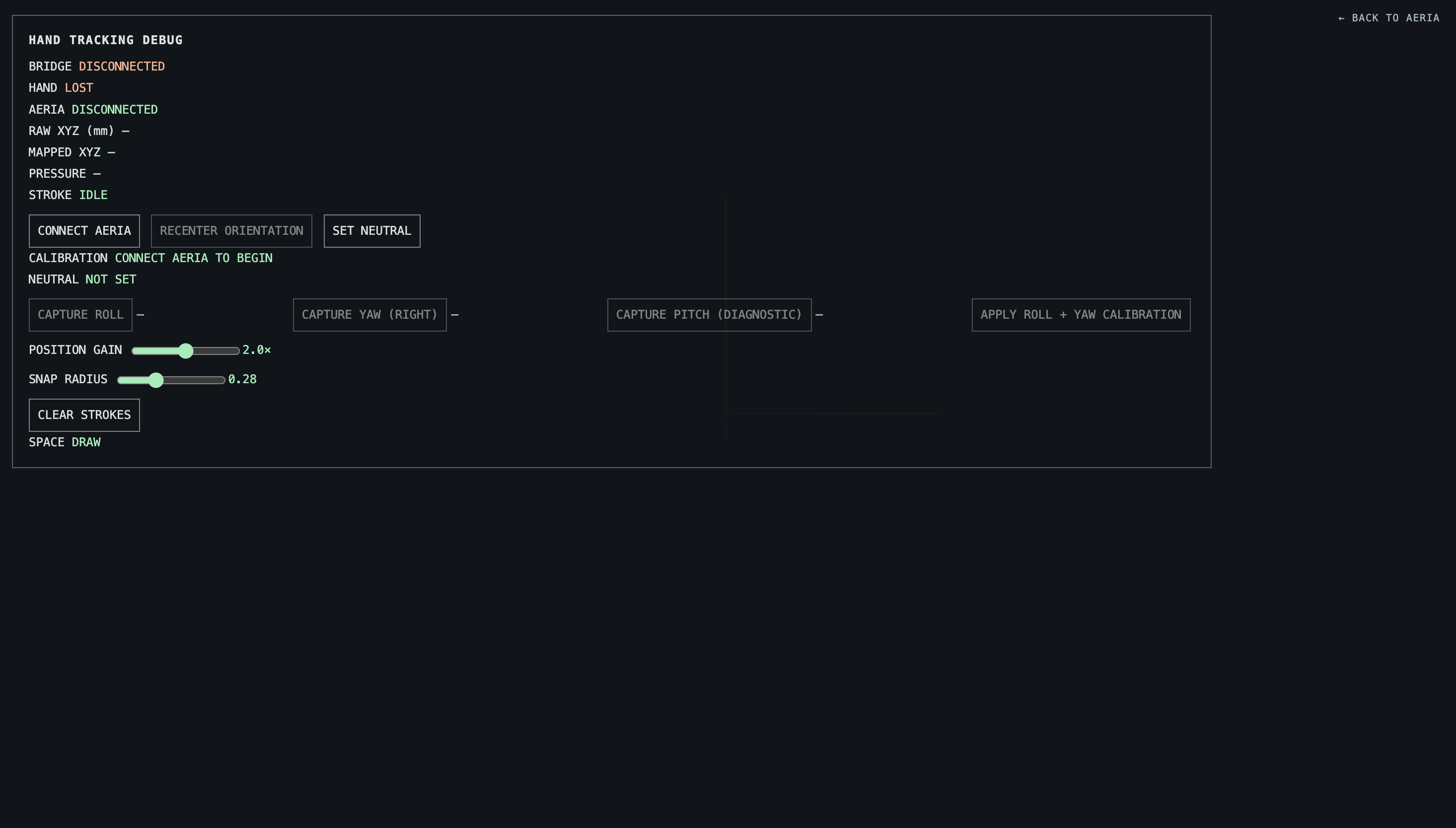
Tracking developmentCalibration interface. Hardware is not connected or validated here.
Built
TraceBrowser spatial drawing experiment.
Working prototype
CreateFlagship deterministic creation demo.
Concept prototype
LearnDesktop simulation of a spatial art lesson.
Experiment
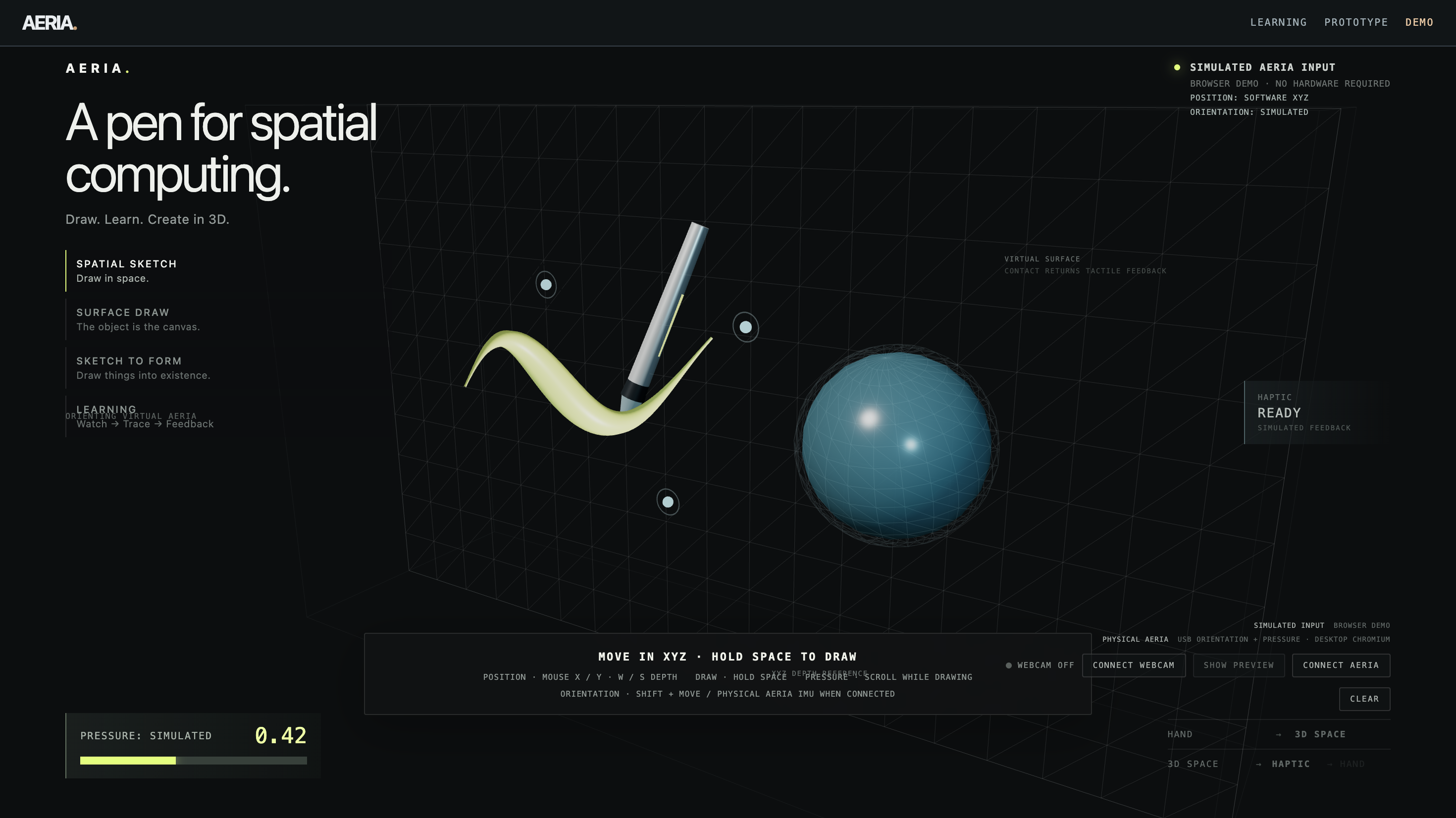
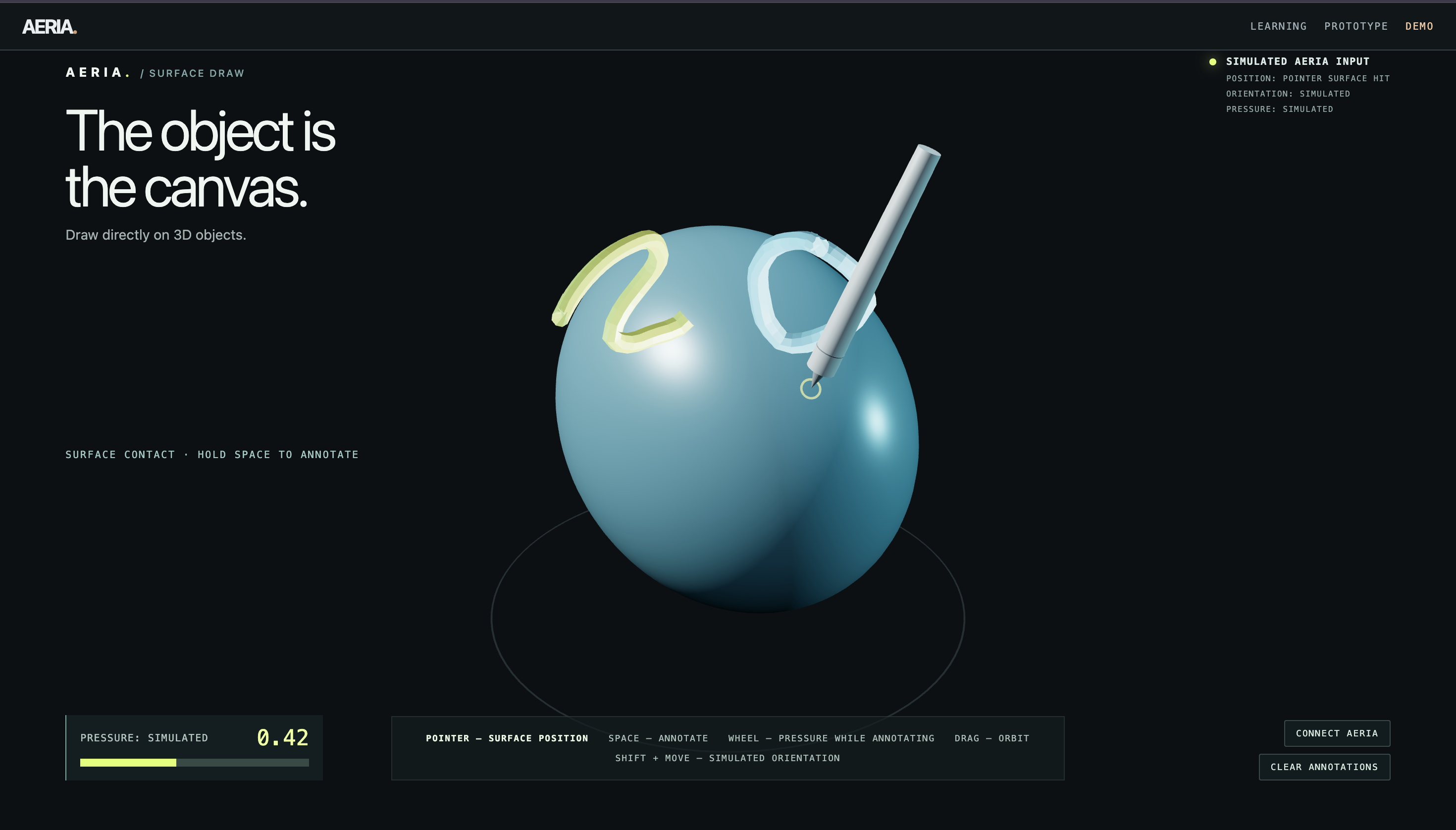
AnnotateSurface drawing experiment.
Building nowV1 trackingFlagship Create demoFirst creator lesson
As AI takes over construction, communicating spatial intent becomes the interface.
Say what. Draw where.
Freya — FounderTsinghua Architecture · Cornell Tech Former Aptos DevRel · former tech creator
Building nowV1 tracking · flagship Create demo · first creator lesson
VisionA persistent canvas across digital and physical space.